violin

Do you ever have days when your body needs a longer time than usual to warm up when you start practicing? Perhaps there are moments when one hand is ready much sooner than the other. I know that on certain days my bow arm needs a LOT of extra time to “wake up” at the start of my first practice session. On other occasions, I feel like I’m accomplishing very little during my 20-min-long scale routine. Whenever I sense that it will be one of “those” days, I like to change up the entire fundamental routine. If you tend to experience something similar, are short on time, and/or just want to have a productive “bow day,” kick off your session with the following 5 bow exercises.

Continue reading “5 Quick Bow Warm-ups”

practice for performance

Stress happens when the mind resists what is.” – Dan Millman

This quote jumped out and caught my attention as I was flipping through some books on sports psychology at the Barnes & Noble Cafe in Union Square. It was the middle of a busy audition season and I was fighting against my long history of performance anxiety and self-doubt.

I stared at this sentence and repeated the words over and over in my mind. “Of course! It’s so obvious,” I thought. Except it was anything but obvious in the spur of the moment. Instinctively, the fight or flight response had me “push away” nerves and “act tough” when placed in a stressful situation. My mind would try to resist the nerves, which in turn only created more stress, setting off a vicious, endless cycle. As the saying goes, resistance makes stronger. “Trying” to achieve something only creates a bigger obstacle by making the task at hand more challenging than it already is.

The concept about the relationship between the mind and stress can help us understand the first of the four principles of natural laws, as explained by world champion gymnast, martial artist, and author Dan Millman in his book Body Mind Mastery. Here’s a short summary of these principles and some of their roles in musical growth.

Continue reading “4 Principles of Natural Laws for Musicians”

violin and my left hand

Vibrato, Tension, & Performance Anxiety


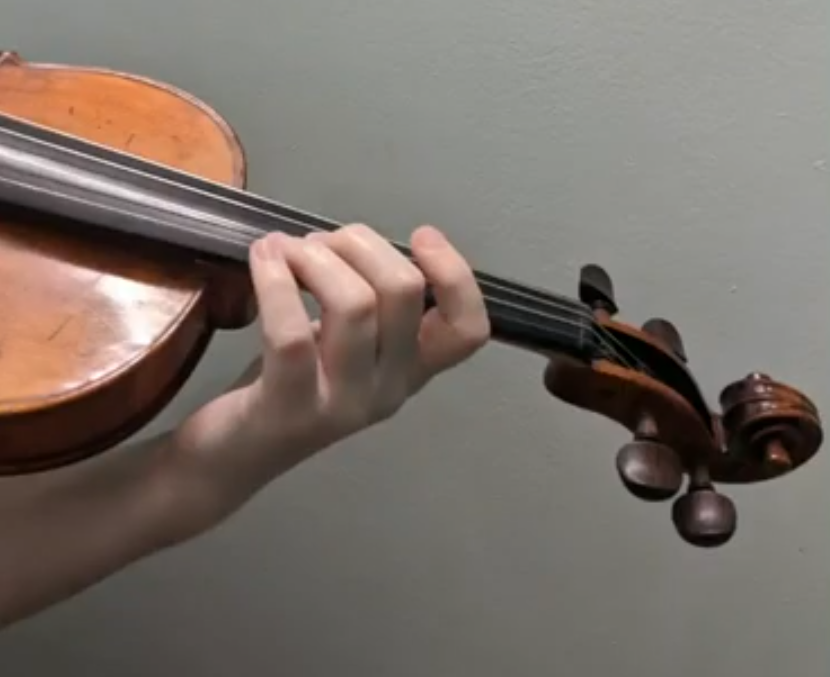
Vibrato is like a musical fingerprint; it’s one of the aspects that distinguishes the sound between one string player and another, and can be developed indefinitely for as long as we play. It’s also one of the most difficult left hand techniques, both from a technical and musical standpoint…at least from personal experience; definitely ranking it among the top 5 for difficulty, if not #1! For some, vibrato is something that miraculously comes naturally. But for me, it’s always been this huge roadblock in my progression, especially during my undergraduate years in college.

Continue reading “Vibrato, Tension, and Performance Anxiety”

What will be your first scale of the new year? Do you ever feel that practicing scales becomes a bit stale after falling into a comfortable routine? I have to confess – some days I substitute my routine in favor of other kinds of exercises in order to feel fresh and engaged during the warm-up.

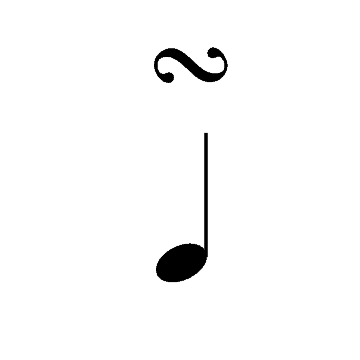
Some time ago, I was studying a chamber music piece from the Classical era in which the violin part had a section filled with embellishments – chromatic turns outlining descending arpeggios, to be specific. These ornaments caused me to stumble, and more than a few times. I was frustrated that a fairly “straight-forward” movement suddenly became very challenging. Any amount of routine scale practice (Galamian, Flesch, or Heifetz) wouldn’t have prepared me for this kind of passage. Instead of looking for an appropriate etude, I decided to come up with some new scale exercises.

Continue reading “Scales With Embellishments (part 1)”

What a whirlwind of a year this has been!  I always wanted to start a blog but never expected to be writing my first post during the last week of 2020.  It’s certainly felt like a “trial” year of sorts (a most historic one!) and of course the global situation can’t magically resolve at midnight on January 1st. My heart goes out to those who lost somebody in their lives to the pandemic and my gratitude goes to frontline workers – doctors, nurses, scientists, teachers, the guy at the bodega around the corner, and many, many others.

With everything going on around us, many of us musicians (and other artists) might be feeling like we are sitting on the sidelines during this time – like we aren’t very helpful to the situation.  Sometimes I also go through periods when I feel useless and that I can’t help anybody.  The truth is, what we do is more important than we can imagine.  We help more people than we know – and most people probably don’t realize just how big of an impact music is to them (at least not on a conscious level).  Music is a universal language that brings people life, unity, and helps to heal. 

Whatever role music has in your life, I hope that going into the New Year, we can take the lessons and experiences from this past year, regroup, and help 2021 be a better year through hope, hard work, resilience, and love. 

 What are your biggest takeaways from 2020 and what are some of your plans going forward?