Sometimes orchestra rehearsals and concerts are not held in the most ideal spaces. Have you ever sat in a section with so little room that you had to contort your body and hold your instrument in the weirdest and most uncomfortable ways to make room for your bow and the musicians around you? Now imagine playing in a 3-hour rehearsal like this. To make things worse, the chairs are terrible and don’t allow both sit bones to distribute your weight evenly to align the back properly. Oh yea, and you also have to make sure that you can see your music and the conductor reliably.


Continue reading “Self-Maintenance and Recovery After Orchestra Rehearsals”
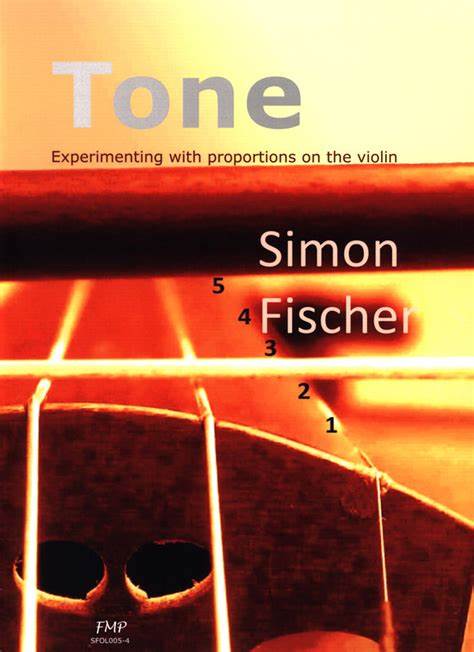
Tone by Simon Fischer

Last week on Tonebase, I was very inspired by the live interview between Daniel Kurganov and Daniel Rowland and their discussion on tone colors. In particular, their exploration of the first movement of the Franck Sonata prompted me to whip out Simon Fischer’s book Tone. Sometimes, when we look for that special sound in a piece, we can imagine it or sing it, but not always sure how to execute it on our instrument…at least not consistently. This is where a lot of experimentation comes in. But for successful experimentation, we also need a deeper understanding of how the different elements on the violin/viola work in tandem.

Continue reading “Exploring Dynamics and Color with Simon Fischer’s ‘Tone’”

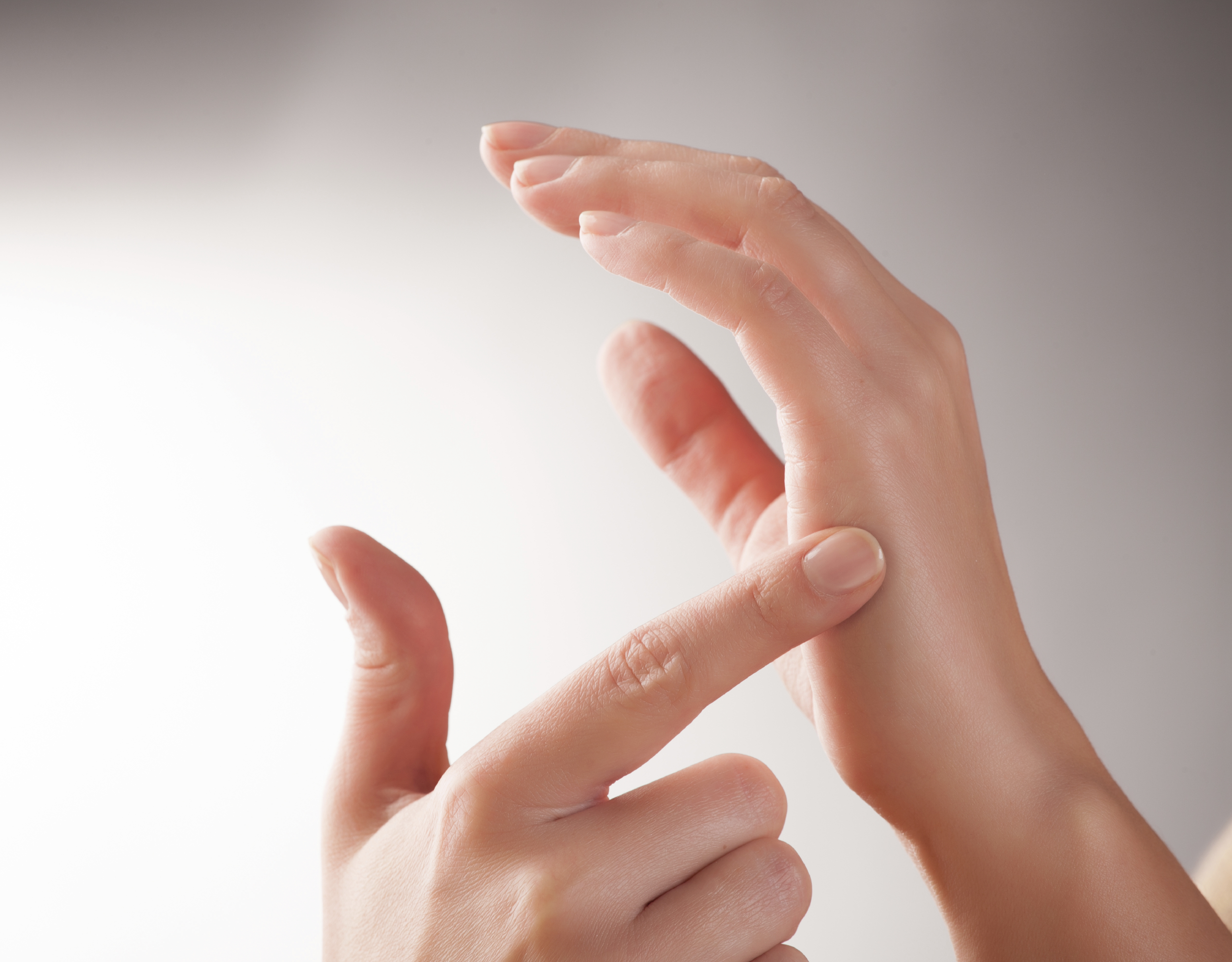
EFT hand image

Affirmations – positive statements about ourselves in first person and in the present tense. But do they really help cope with performance anxiety and resolve negative feelings leading up to a performance?

Have you ever felt like a fool sitting there repeating phrases to yourself like “I am a great musician. I sound amazing. I am very confident about this.”? All in the midst of being a nervous wreck just before getting up on stage or taking an audition. Ever feel like you were forcing this message to your subconscious self and try to trick yourself out of feeling inadequate, intimidated, or like an impostor?

This is a pretty common scenario. Unfortunately, affirmations don’t always work, even with all best intentions. If we feel like we are lying to ourselves with these statements, affirmations may cause us more harm than good.

There is a better way.

Continue reading “What We Get Wrong about Affirmations and Why to Try EFT Instead”

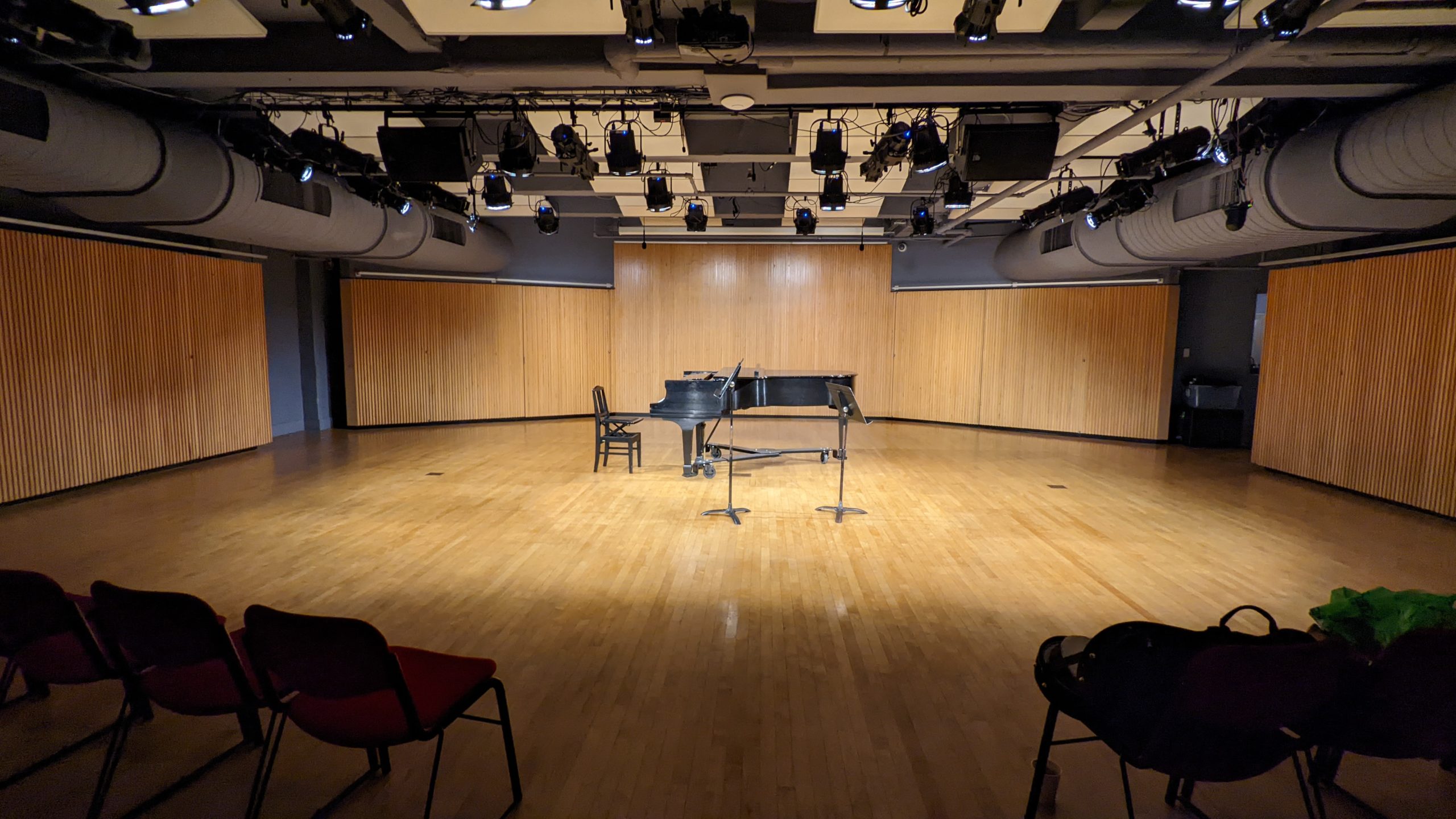
third street music school concert hall

I rarely play recitals. Most of my concerts are symphonic, and occasionally, a third-party event with a chamber ensemble. But this past Friday the 13th I co-hosted one of the concerts as part of the faculty recital series at the school I teach 3 days a week: Third Street Music School Settlement in the East Village of NYC. My colleagues and I had a great time presenting character pieces of Spain and France of the late 19th & early 20th centuries. Some of my young students came and even brought some friends (and their parents) from outside of the school!

Here is the link to the REPLAY in case you’re interested: …Be sure to open in a browser (the Vimeo app is glitchy); Starts about 16 minutes in.
Continue reading “Feeling the Audience Energy”

less but better, quote by dieter rams

Going into the new year, one of my resolutions this year is to be stricter with myself about the “less but better” principle when it comes to striving for the bigger goals (whether it be in the practice room, the studio, or the gym). Ever since the pandemic started, my social media and email inbox has been bombarded with a crazy amount of (very valuable) information. It caused my attention to divert in too many different directions. I would rotate a few too many hats in a single day, convincing myself that I could somehow “do it all” – of course the reality is that everything comes at a cost.


Continue reading “New Year’s Resolutions: “Less But Better” & Sleep For Success”

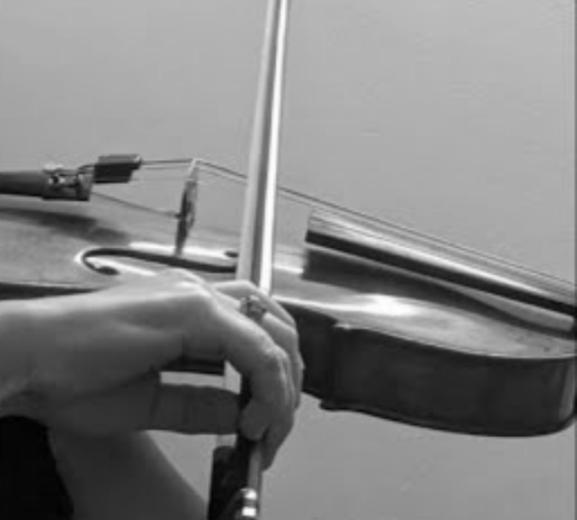
bow hand

I’ve been thinking long and hard about where to begin the discussion on best practices to minimize unnecessary tension in the bow arm. The complexities of bow technique development for good tone production, various articulations, dynamics, and expression can easily lead one to develop bad habits somewhere along the way.


The most common problems with bow arm tension in players of ALL levels are: Continue reading “Unfolding Tension in the Bow Arm & Hand”

gratitude changes everything

If you’re anything like me, the busyness and excitement of holidays (combined with shorter/colder days in the northern hemisphere) can lead to feelings of overwhelm and anxiety. One effective way to manage (besides sitting with the feelings and accepting them for what they are in the moment) is by practicing gratitude.

Try an exercise with me, called Three Great Things: Continue reading “Three Great Things: The Power of Gratitude”

We can develop musicality through the study of music theory, harmonic analysis, history, and ear training. These are studies that help us understand music better on an intellectual and aural level. On the other hand, we can also experience emotions that we wish to express through music, and/or we feel something while listening to a piece. We might know exactly how we wish to phrase something and have a vision for the bigger scope of a piece. However, all that musicality can be blocked by our physical body when we pick up our instrument.

Continue reading “Musicality and Physical Freedom”

mountain climbing team

Have you ever been told (or know someone who was told) “It’s too late to learn an instrument at this point in your life” or “You’ve aged out of all music festivals and haven’t landed a big job – it’s too late to progress”? This is part of an old, false belief that’s still making its rounds around the globe. It’s part of a fixed mindset epidemic that’s easier to fall into as we go through life.

Continue reading “Learning & Improving Skills as an Adult”

forearm rotation vs index finger pressure

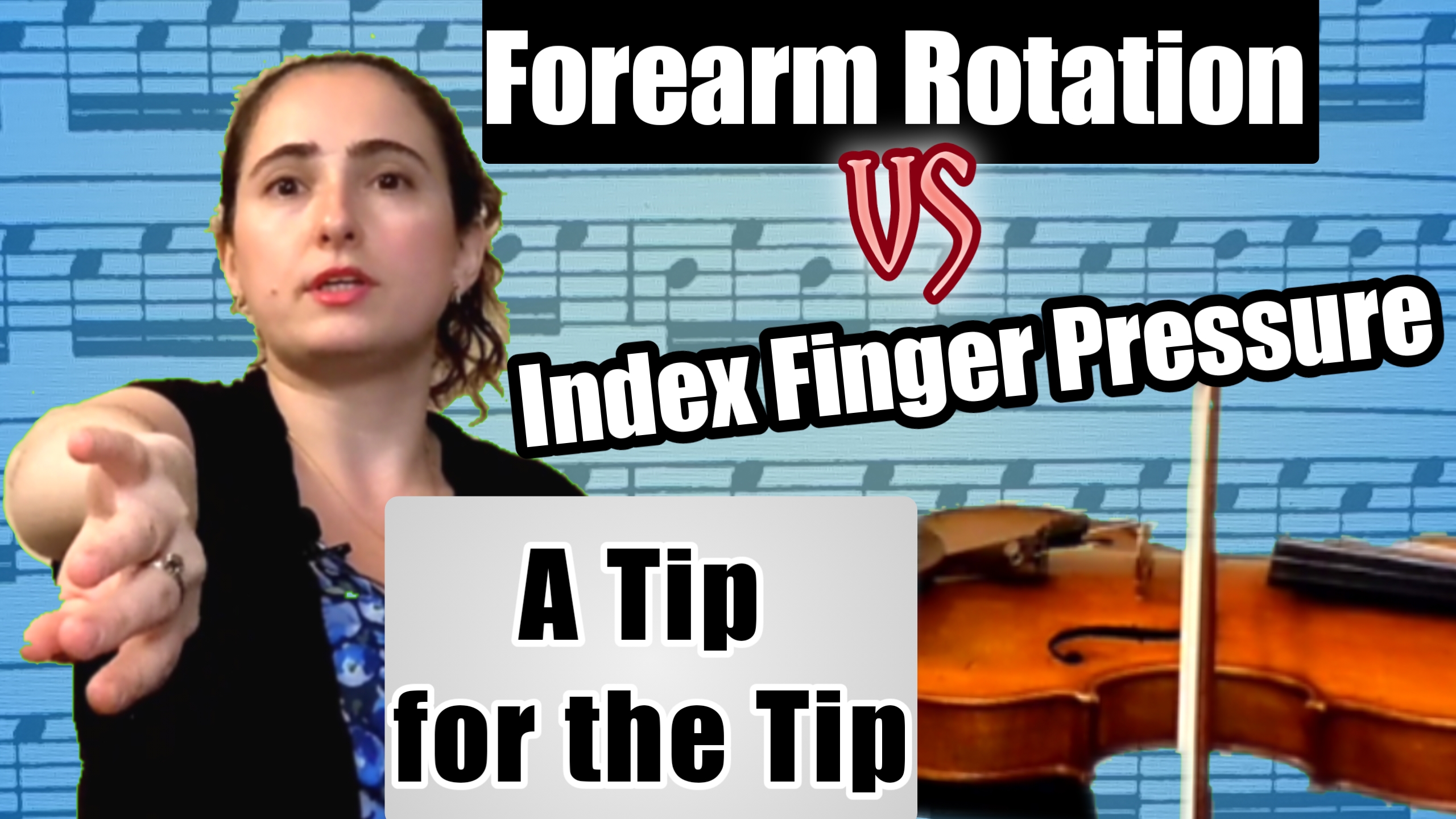
An alternative approach to bow “pressure” involves the entire forearm and using the natural arm weight. Develop beautiful, even sound with more consistency and less effort with these exercises.

Continue reading “How To Get a Good Sound at the Tip with Less Effort and More Consistency”